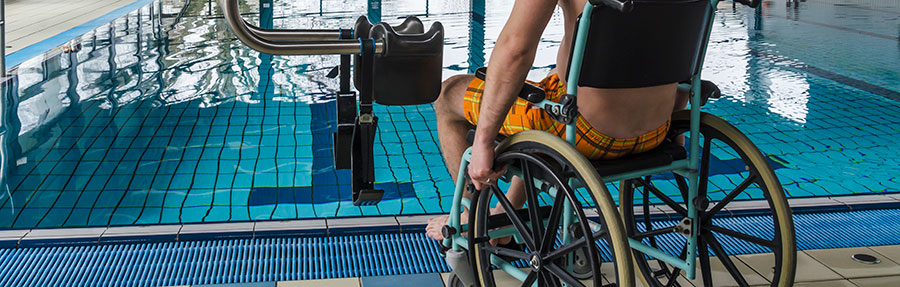
Pool lifts: the importance of fostering inclusion from language to the pool
The importance of promoting inclusion
In our society, people with functional diversity face multiple barriers in accessing public and recreational spaces, including places such as swimming pools, where the lack of adequate infrastructure can limit their participation. Although progress has been made, many People with reduced mobility still find it difficult to enjoy many public swimming pools due to the scarcity of adapted facilities.
The language we use also reflects these barriers: for a long time, terms such as "minusválido" or "discapacitado" were widely used to refer to this group. However, in recent years, there has been a major shift towards more inclusive expressions, such as "people with disabilities" or "people with functional diversity", an alternative term chosen by the people affected. This change is not only terminological, but has profound implications for the way we promote inclusion, equality and respect for people with functional diversity, also guaranteeing their access to spaces such as swimming pools in a safe and dignified manner.
Persons with disabilities.
The value of inclusive language, from handicapped to people with functional diversity
The term "people with functional diversity" has recently begun to be used, driven by the group itself. Previously, the common expression "people with disabilities," although person-centered, is still considered by some to be semantically pejorative. The new term, "functional diversity", not only puts the person in the foreground, but also enhances their intrinsic value, prioritizing their dignity and humanity above any particular condition. This terminology reflects a shift towards a more positive language, which recognizes functional diversity as just another characteristic of the person, without defining it completely.
Adopting this type of language helps to avoid derogatory or inferiority connotations, such as those still carried by obsolete expressions like "handicapped" or "disabled", thus helping to dismantle stereotypes and prejudices that perpetuate social exclusion. The use of inclusive language is not just a matter of political correctness; it is an essential act in building a more just and egalitarian society. Both individually and collectively, it is essential to leave behind outdated expressions and adopt a language based on respect, which starts with how we refer to others.
Various needs of people with functional diversity in swimming pools
Each type of disability implies different needs that must be adequately addressed to ensure comfortable and safe access to recreational spaces, such as swimming pools. People with physical, sensory or intellectual disabilities require adapted solutions that respect their autonomy and rights.
People with reduced mobilityThis group may include people with reduced mobility, paralysis or amputations. For them, a pool lift should allow a smooth transition from wheelchair to water, providing stability and safety.
People with sensory functional diversity: In the case of visual or hearing impairments, the needs revolve around communication and safety. Pool lifts can incorporate visual or auditory signals to ensure safe and autonomous use.
People with intellectual diversity: For People with cognitive disabilities, it is essential that the lifting devices are easy to operate and that the environment is safe and controlled. This ensures that they can enjoy the water without stress or complications.
.
Encourage autonomy and protect the rights of People with disabilities
Beyond providing safe access, it is vital that as a society we protect the rights of People with disabilities and encourage their freedom to live as autonomous a life as possible. This means providing them with the tools, infrastructure and support necessary to enable them to carry out daily and recreational activities independently, without barriers or restrictions.
Access to spaces such as swimming pools should not be a privilege, but a guaranteed right. It is the responsibility of all of us to ensure that People with disabilities can enjoy the benefits that water and swimming bring to health and well-being. Swimming pools are not only places for leisure, but also therapeutic spaces where People with disabilities can improve their physical and emotional quality of life.
Conclusion
Pool lifts are an essential tool to ensure that people with functional diversity can safely and comfortably access swimming pools, enjoying their multiple health and wellness benefits. Ensuring this access not only contributes to their physical well-being, but also promotes their social inclusion and fosters their autonomy. Together, we must protect the rights of people with functional diversity and enable them to live freely and fully, maximizing their possibilities for participation in society.
Product added to compare.
We use our own and third-party cookies for analytical purposes and to show you personalised advertising based on a profile of your browsing habits (e.g. pages visited). For more information, please see our Cookie Policy